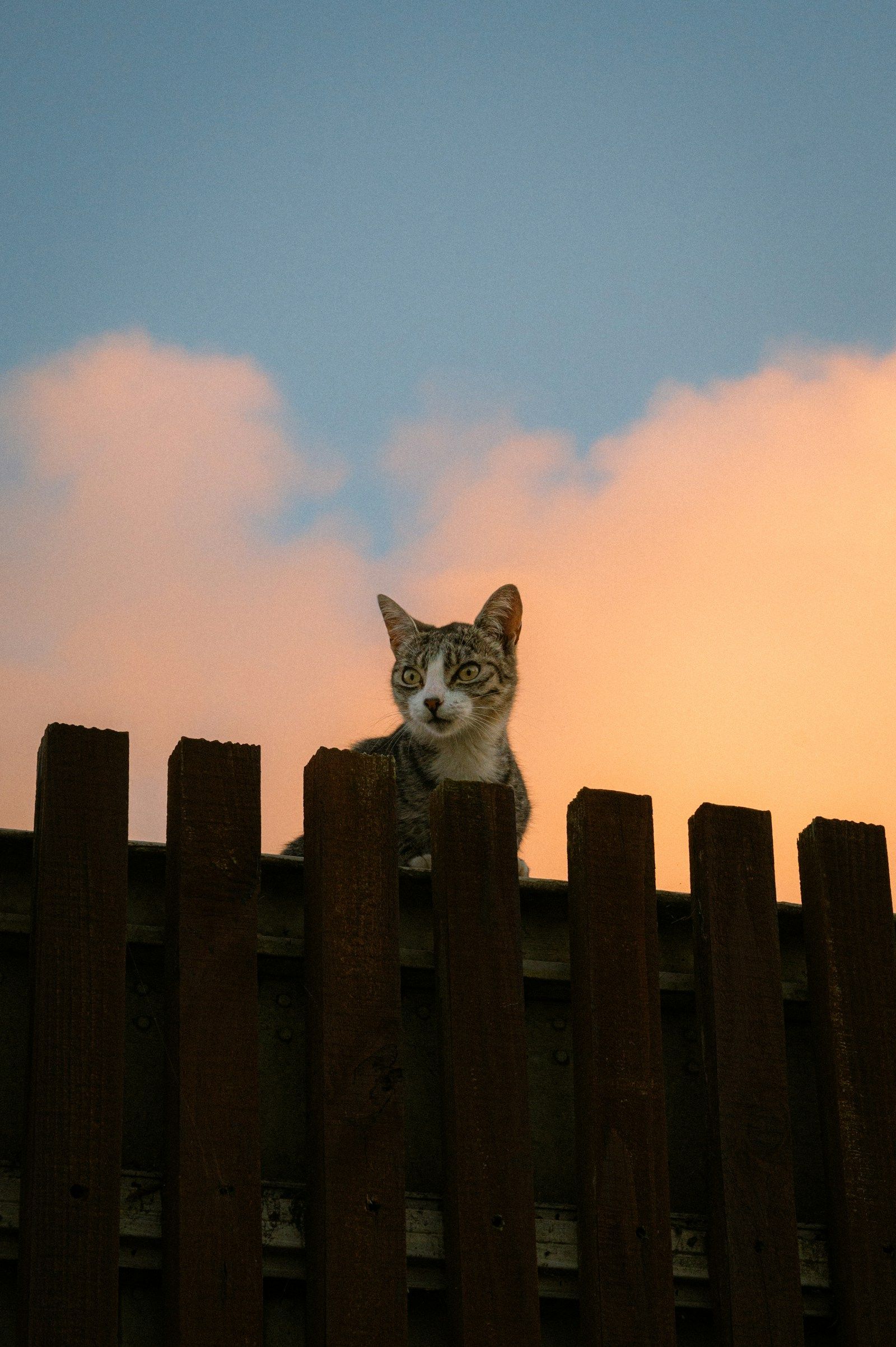
The short answer
A relaxed cat holds its ears up and forward, its body loose and its tail up, and it may blink slowly at you. A frightened cat makes itself small: crouched low, ears turned back, tail tucked in, pupils wide. A cat that feels it may have to fight makes itself big, with its back arched and its fur on end. Hissing and growling are warnings to back off, and a thrashing tail means the cat is annoyed or about to lash out.
Read it in full and get the PDF, free
Still to read: Ears and whiskers, Eyes, and the slow blink and 5 more sections, plus the Cat Body Language Chart.
No single signal tells you everything. Cats communicate with their posture, tail, ears, head and eyes, by touch, by sound and by scent, as the Feline Veterinary Medical Association (FelineVMA, formerly the American Association of Feline Practitioners) describes. Read the signals together, and with what is going on around the cat: wide pupils can mean fear, play or just a dim room.
Moods at a glance
| Signal | Happy or relaxed | Stressed or frightened | About to lash out |
|---|---|---|---|
| Tail | Straight up, often with a curl at the tip | Held close to the body, or wrapped tightly around or under it | Flicking or thrashing |
| Ears | Upright and facing forward | Turned to the sides (“airplane ears”) or back; the further back, the more frightened | Turned back or flat against the head |
| Eyes | Round or half closed, pupils narrow; slow blinks | Wide, with big pupils | Wide with big pupils, or narrowed and staring at the threat |
| Whiskers | Loose and curved | Pushed forward when stressed; pulled back flat against the face when frightened | Flat against the cheeks, or pushed forward |
| Body | Loose; lying stretched out, maybe showing the belly, kneading or cuddling up | Stiff, tense and low to the ground, or crouched to look small | Back arched and fur standing on end, to look as big as possible |
| Sounds | Purring; a trill or a meow to greet you or ask for something | Hissing and growling, warning you to back off | A long yowl and a shriek, or a spit with a lunge or swat |
From PetMD’s guide by Alison Gerken, DVM, DACVB, a board-certified veterinary behaviorist; relaxed whiskers from the Feline Grimace Scale. Pupils also widen in dim light and in play, so read the whole cat.
The tail
- Straight up, often with a curl at the tip: a reliable sign of a happy, confident cat.
- Flicking from side to side while the cat watches something: it is focused on hunting or play. Flicking when there is nothing to stalk usually means it is annoyed: stop petting and give the cat space.
- Held close to the body, or thrashing and thumping: stressed or annoyed.
- Wrapped tightly around or under the body: frightened. Sick cats and cats in pain hold their tails this way too.
- Puffed up like a bottle brush, with the fur on end: a frightened cat making itself look bigger. Back away and let it calm down.
Free, by email
Read the rest of this guide free
Join our free pet health emails to read every guide in full and get its printable PDF.
Still to read in this guide
- Ears and whiskers
- Eyes, and the slow blink
- Body and posture
- Sounds
- Signs a cat is comfortable with you
- and 2 more sections
Also yours when you join: this guide as a PDF, the TNR Caretaker Starter Kit and the Cat Body Language Chart.
Ears and whiskers
- Upright and facing forward: happy, or alert and ready to play.
- Turned out to the sides like airplane wings, or angled back: stressed.
- Pinned back against the head: frightened. The further back the ears go, the more frightened the cat.
- Turned back or flat, with a hard stare at you or another animal: a cat that may be about to defend itself.
- Held low or turned out to the sides in a quiet, withdrawn cat: it may be sick or in pain.
- Whiskers pushed further forward than usual mean stress; whiskers pulled back flat against the face mean fear.
Eyes, and the slow blink
A content cat’s eyes are round or half closed, with narrow pupils. A playful cat’s eyes are big, and its pupils may be wide. Fear widens both the eyes and the pupils as the body gets ready to fight or flee, and a cat about to lash out often stares straight at what is bothering it. Squinted or closed eyes in a cat that is hunched or hiding can mean pain.
A slow blink is friendly. In a 2020 study at the University of Sussex, cats narrowed their eyes more when their owners slow-blinked at them than when there was no interaction, and cats were more likely to approach a stranger’s hand after the stranger had slow-blinked at them than after a neutral face. The researchers suggest slow blinks work as a positive signal between cats and people.
To try it, sit about 3 feet from the cat, as the owners in the study did, and look at it with soft, half-closed eyes, then close them slowly for a moment. Then look away, and let the cat decide whether to come over.
Body and posture
- Loose and relaxed: lying stretched out with the legs and tail away from the body, maybe kneading or curling up next to you.
- Rolling over to show the belly: the cat probably feels safe, but that isn’t always an invitation to touch the belly. Stroke the cheeks and chin instead, and stop if the tail starts to flick.
- Crouching with the rear end wiggling, then a pounce: play.
- Stiff and tense, held low to the ground: stressed. A stressed cat may also lick its lips, scratch, groom or yawn out of context, and some urinate or defecate outside the litter box.
- Crouched and scrunched up to look small: frightened. Leave it a way out.
- Back arched and fur on end, to look as big as possible: the cat feels in danger and may fight if it has no other choice. Back away slowly.
- Hunched, with the legs tucked underneath and the body tense: the cat may be sick or in pain. Check its face with the Feline Grimace Scale in our pain guide.
Sounds
The FelineVMA’s behavior guidelines note that cats purr mainly when they are in contact with someone, and use the trill (or chirrup) and the meow as greetings.
- Purring: usually contentment, but sick cats and cats in pain purr too, so read it with the rest of the cat.
- Meowing: a greeting, or a request for food or attention. A cat that suddenly meows or yowls much more than usual may be in distress, physical or emotional: have it checked.
- Trilling, a high-pitched sound like a short purr: a friendly hello.
- Hissing and growling: a warning to back off. Hissing is mostly a reflex, when a cat is scared or startled.
- Spitting, with a lunge or a swat: the warnings were ignored. Step back.
- A long, drawn-out yowl, then a shriek: a frightened cat about to defend itself.
Signs a cat is comfortable with you
- It comes toward you with its tail up.
- It rubs its head, cheeks or body against you: cats rub against other cats and people as part of how they communicate.
- It touches noses, which cats use as a greeting. A friendly cat may sniff your finger the same way.
- It blinks slowly at you, or trills or meows when you come in.
- It kneads you, curls up next to you, or relaxes enough to stretch out and show its belly.
Approaching a frightened or community cat
- Move slowly, crouch or sit sideways, and avoid staring: a hard stare can read as a threat. Try a slow blink from a distance, then look away.
- Let the cat choose to approach. Never corner it or reach for it.
- Let the cat start and end contact. Stroke the cheeks and chin briefly, and stop when it pulls away, its tail starts to flick or its ears turn sideways.
- Feed at the same time and place every day; trust builds with routine.
- Never handle a frightened or feral cat with bare hands. A bite or scratch that breaks the skin needs medical attention.
- A feral cat may never enjoy being touched, and that is normal for it. Once it is neutered and vaccinated through TNR, it can live outdoors with a caretaker who feeds it: see what TNR is and stray, feral or pet?
Quick answers
What does it mean when a cat’s tail is straight up?
A tail held straight up, often with a curl at the tip, is a reliable sign that a cat is happy and confident.
What does it mean when a cat slow blinks at you?
It is a friendly signal. In a 2020 study, cats narrowed their eyes more when their owners slow-blinked at them, and were more likely to approach a stranger after a slow blink. Blink slowly back.
Why does my cat show me its belly, then bite when I touch it?
Showing the belly means the cat probably feels safe, which isn’t always an invitation to touch it. Stroke the cheeks and chin instead, and stop when the tail flicks or the ears turn.
What does it mean when a cat’s ears are flat?
Ears turned sideways or back mean stress or fear. Flat against the head, the cat may be about to defend itself. Give it space and a way out.
Does purring always mean a cat is happy?
No. Purring usually means contentment, but cats also purr when they are sick or in pain. Read it with the rest of the cat.
Why does my cat’s tail flick while I pet it?
A tail that flicks when there is nothing to stalk usually means the cat is annoyed. Stop petting and let it walk away.
How can I tell from its body language if my cat is in pain?
Look for a hunched posture with the legs tucked under, ears held low or out to the sides, squinted eyes and a lowered head. Score its face with the Feline Grimace Scale in our pain guide, and call your vet.
Sources
- American Association of Feline Practitioners — Feline Behavior Guidelines (2004, PDF)https://catvets.com/wp-content/uploads/2024/01/FelineBehaviorGLS.pdf
- PetMD — How To Read a Cat’s Body Language (Alison Gerken, DVM, DACVB)https://www.petmd.com/cat/behavior/cat-body-language
- Humphrey et al., The role of cat eye narrowing movements in cat–human communication (Scientific Reports, 2020)https://www.nature.com/articles/s41598-020-73426-0
- Evangelista et al., Facial expressions of pain in cats: the Feline Grimace Scale (Scientific Reports, 2019)https://www.nature.com/articles/s41598-019-55693-8
- Alley Cat Allies — Stray, Feral, and Pet Catshttps://www.alleycat.org/community-cat-care/whats-the-difference-between-stray-feral-and-pet-cats/
This guide is general information for caretakers, not veterinary advice. For a sick or injured cat, call your veterinarian or Veterinary Emergency Clinic, Cheektowaga at (716) 403-4370 (Open 24/7). Questions about our program: (716) 200-1283 · cattcountycatnippers.org