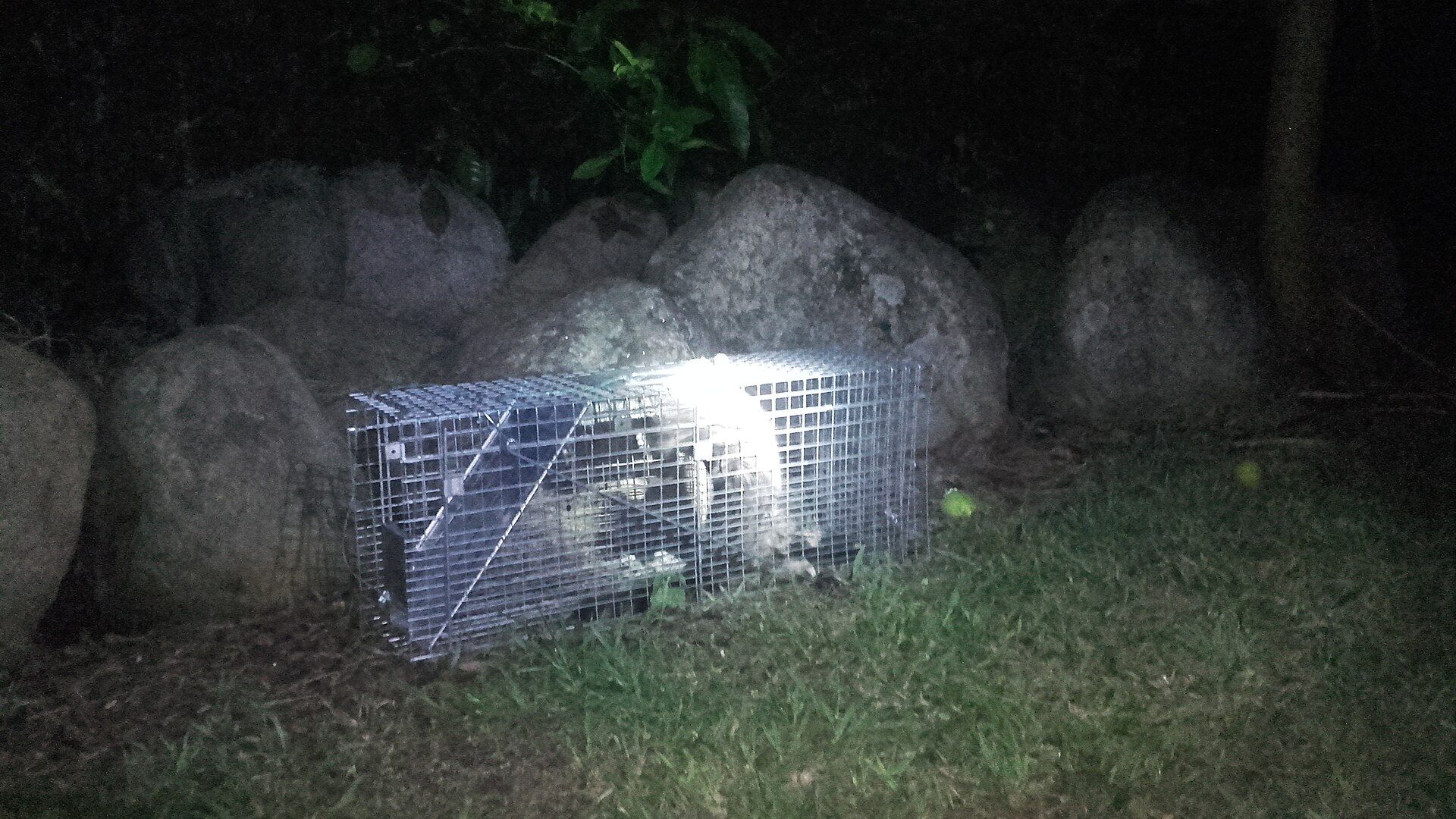

What TNR is
Trap-Neuter-Return (TNR) means humanely trapping the cats in a colony, having them spayed or neutered, vaccinated and ear-tipped by a veterinarian, and returning them to the place they live. A caretaker keeps feeding and watching the colony afterward.
Read it in full and get the PDF, free
Still to read: Trapping, At the clinic and 4 more sections, plus the Colony Caretaker TNR Binder.
Sterilized colonies stop producing litters. Alley Cat Allies calls TNR the humane, effective approach to outdoor cats: it ensures no new kittens are born, stabilizes the colony, provides vaccines and improves the cats’ lives. It also stops the behaviors and stresses that come with mating, such as yowling, spraying and fighting.
The ear-tip, a small straight cut on the tip of one ear made under anesthesia, lets anyone see from a distance that a cat has already been through TNR and should not be trapped again.
Wondering whether TNR is allowed where you live? See TNR and the law in New York.
The seven steps at a glance
| Step | What you do |
|---|---|
| 1. Learn | Read up or take a TNR workshop: working with community cats safely takes some training |
| 2. Work the neighborhood | Find out who feeds the cats, explain the plan, and get permission where you need access |
| 3. Feed on a schedule | Same time, same place, no food left out all day; count the cats |
| 4. Find a holding space | Warm (at least 65°F), dry and secure: a garage, basement, shed or spare room |
| 5. Book surgery, traps and transport | Appointments first, then one trap per cat and a way to get them there |
| 6. Trap | Withhold food 24 to 48 hours, never water, and trap close to the surgery date |
| 7. Return and care | Back to the same spot after recovery; keep feeding, and watch for newcomers |
Adapted from Neighborhood Cats’ seven steps of TNR.
Before trapping day
Print the caretaker starter kit to work through these steps: checklists for planning, trapping day and recovery, tips for hard-to-trap cats, and a colony log.
- Talk to the neighbors. Ask about the cats’ history and habits, find out who else feeds them, explain what you plan to do and why, and get permission from property owners where you need access.
- Count the colony. Note each cat’s coat, size, and whether any are pregnant, nursing, injured or very young.
- Feed on a schedule: the same time and place every day, and pick up leftover food instead of leaving it out. Cats that expect food at a set time are much easier to trap.
- Book surgery first. Arrange the clinic appointment (or contact us for a voucher) before you trap, so cats are not held longer than needed.
- Prepare a warm, quiet, covered holding space (a garage, basement or spare room) where cats can recover in their traps: at least 65°F, Neighborhood Cats says; around 70°F, Alley Cat Allies says.
- Borrow or buy enough humane box traps for the number of cats you plan to catch, and practice setting them.
Free, by email
Read the rest of this guide free
Join our free pet health emails to read every guide in full and get its printable PDF.
Still to read in this guide
- Trapping
- At the clinic
- Recovery and return
- After TNR: caring for the colony
- Quick answers
- and 1 more section
Also yours when you join: this guide as a PDF, the free colony roster and the Colony Caretaker TNR Binder.
Trapping
Withhold food for about 24 hours before trapping, and never for more than 48 hours. Never withhold water. A hungry cat is far more likely to walk into a trap. Bait each trap with strong-smelling food at the back, set it, and stay nearby but out of sight.
Trap close to the surgery date, so no cat waits long in a trap: Alley Cat Allies traps the night before or the morning of the appointment, and Neighborhood Cats starts two days ahead, leaving a second day for the cats missed on the first.
As soon as a cat is caught, cover the trap with a sheet or towel. Covering calms the cat. Never open a trap to move a cat or try to handle it. For wary cats, see how to trap a feral cat.
At the clinic
Each cat is spayed or neutered, vaccinated against rabies (usually with an FVRCP vaccine too) and ear-tipped while under anesthesia. Alley Cat Allies describes the ear-tip as the painless removal of about 3/8 inch from the tip of the left ear, and asks vets to scan every cat for a microchip, so that a lost pet can go home.
Kittens can be spayed or neutered once they are healthy and weigh at least 2 pounds. See when to spay or neuter a cat.
Recovery and return
Keep cats in their covered traps in the holding space until surgery and through recovery. Most adult cats are held about 24 hours after surgery; follow your clinic’s instructions, which may be longer for some females.
Cats coming out of anesthesia can’t regulate their body temperature, so keep the space warm, and check on them every hour or two. A cat that is very lethargic or vomiting needs the vet: don’t open the trap. Alley Cat Allies returns cats once they are clear-eyed and alert, usually 24 hours after surgery.
Return each cat to the exact spot where it was trapped, in daylight if possible, and keep feeding on the usual schedule.
Trapped a nursing mother? Alley Cat Allies advises having her spayed and returned within one day, as your vet directs, so she can keep nursing. Plan around litters where you can: ask us for help, and see what to do about kittens.
After TNR: caring for the colony
Keep feeding at the same time and place, provide shelter, and watch for newcomers: a cat without an ear-tip hasn’t been through TNR yet. Deal with neighbors’ concerns as they come up, for example by keeping cats out of gardens.
See managing a feral cat colony, what to feed stray and feral cats and how to build a winter shelter.
Quick answers
What does TNR stand for?
Trap-Neuter-Return: humanely trapping community cats, having them spayed or neutered, vaccinated and ear-tipped, and returning them to where they live.
Does TNR work?
A sterilized colony stops producing litters. Alley Cat Allies calls TNR the humane, effective approach: no new kittens, a stable colony, vaccinated cats, and an end to the yowling, spraying and fighting that come with mating.
Why is one ear clipped?
The ear-tip, about 3/8 inch off the tip of the left ear, made under anesthesia, shows from a distance that a cat has been through TNR, so it isn’t trapped again.
How long should I withhold food before trapping?
About 24 hours, and never more than 48. Never withhold water.
How long are cats kept after surgery?
Usually about 24 hours, in their covered traps, until they are clear-eyed and alert; some females need longer. Follow your clinic’s instructions.
Can I do TNR in winter?
Yes, with care: put out winter shelters, keep the holding space at least 65°F, and check the forecast before you trap.
Checklist
- Colony count and descriptions written down
- Surgery appointment or voucher confirmed
- Humane traps, one per cat, plus covers
- Food withheld about 24 hours, never over 48 (water always left out)
- Warm, quiet holding space ready
- Return plan: same location as trapping
Sources
- Neighborhood Cats — The 7 Steps of TNRhttps://www.neighborhoodcats.org/how-to-tnr/getting-started/the-7-steps-of-tnr
- Alley Cat Allies — A Step-by-Step Guide to Trap-Neuter-Returnhttps://www.alleycat.org/resources/how-to-help-community-cats-a-step-by-step-guide-to-trap-neuter-return/
- Alley Cat Allies — Keep Community Cats Comfortable While in Their Traphttps://www.alleycat.org/community-cat-care/keep-community-cats-comfortable-while-in-their-trap/
- Alley Cat Allies — TNR Basics (PDF)https://www.alleycat.org/wp-content/uploads/2016/09/TNRBasics_TruthCard.pdf
- Alley Cat Allies — Tips for Hard-To-Trap Catshttps://www.alleycat.org/tips-for-hard-to-trap-cats/
This guide is general information for caretakers, not veterinary advice. For a sick or injured cat, call your veterinarian or Veterinary Emergency Clinic, Cheektowaga at (716) 403-4370 (Open 24/7). Questions about our program: (716) 200-1283 · cattcountycatnippers.org