
How to use this kit
Print the PDF, keep it with your traps, and fill in the colony log as you go. Each step is explained in our TNR guide; if you are working through the winter, see winter care for outdoor cats.
Caring for cats in Cattaraugus County and need help with surgery costs or traps? Apply here.
Planning checklist: the week before
- Get to know the neighborhood: find out who else feeds the cats, and get permission from property owners where you need access.
- Count the colony and describe each cat in the log: coat, size, and any that are pregnant, nursing, injured or very young.
- Feed on a schedule: the same time and place every day. Pick up leftovers.
- Book surgery appointments before you trap, or apply to us for help with the cost.
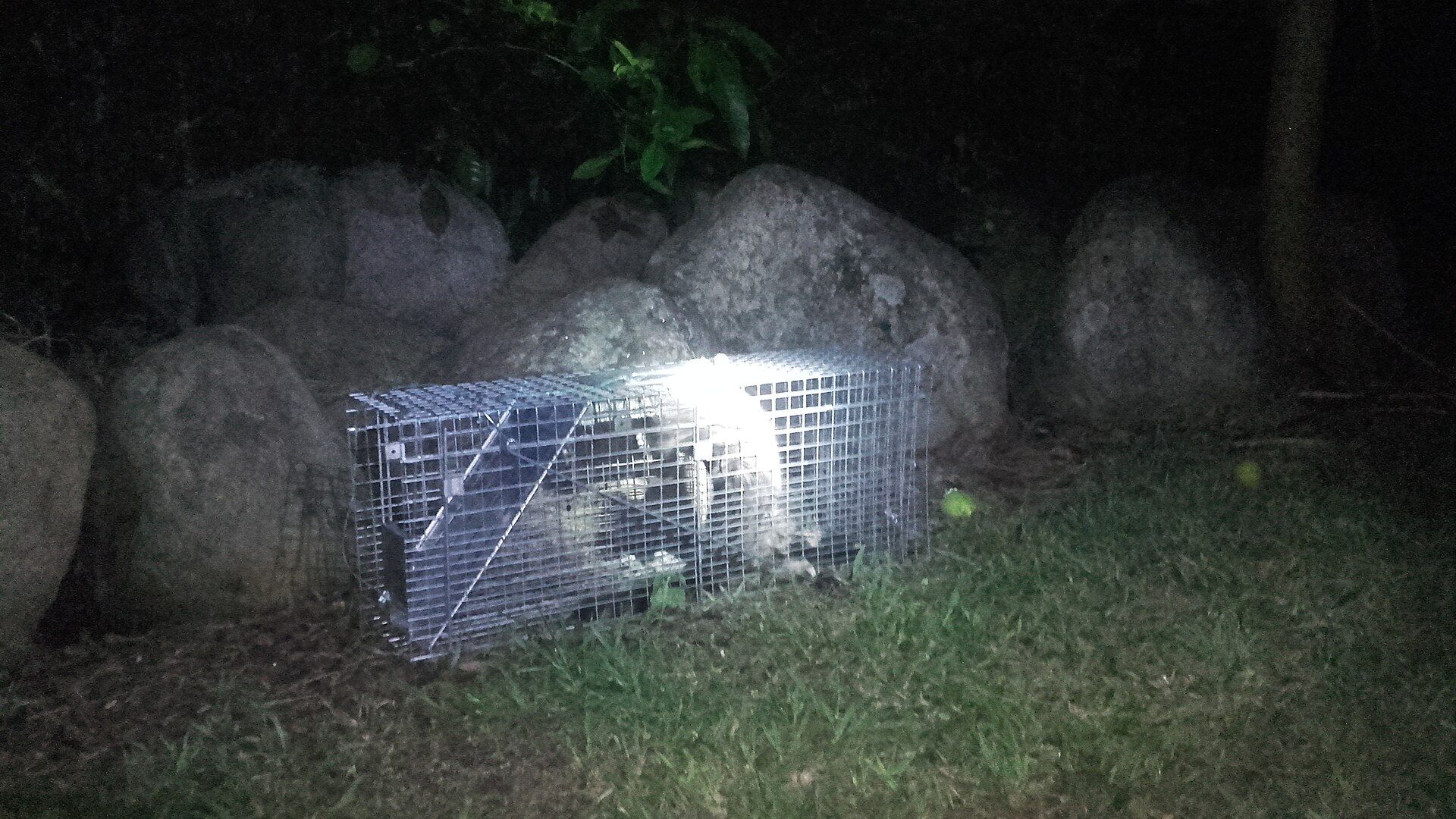
- Line up humane box traps, one per cat, and a sheet or towel to cover each one.
- Ready a warm, dry, secure holding space, away from fumes, other animals and people. Neighborhood Cats suggests at least 65°F; Alley Cat Allies, around 70°F.
- Arrange transport where traps sit flat and secured. Never in a trunk or an open truck bed.
- Check the forecast. If it is too hot or too cold for you, it is too hot or too cold for a cat in a trap.
Trapping-day checklist
- Food withheld for about 24 hours, never more than 48. Never withhold water.
- Each trap lined with newspaper folded lengthwise (taped down if windy).
- Each trap tagged with where it was set.
- Bait: about a tablespoon of strong-smelling food at the back, with a little juice drizzled toward the entrance.
- Traps on flat, stable ground in quiet spots; several traps staggered and facing different ways.
- You can see the traps; the cats cannot see you. Never leave a trap unattended.
- Cat caught: cover the trap at once and move it to the holding space.
- Never open the trap or try to handle the cat.
- Cat’s description added to the trap tag and the colony log.
- Traps counted before you leave, so none is left behind.
After surgery
- Each cat kept covered in its trap in the holding space while it recovers. Follow the clinic’s instructions on how long.
- A cat that is very lethargic or vomiting: do not open the trap; call the veterinarian.
- Each cat returned to the exact spot where it was trapped.
- Feeding continues on the usual schedule.
- Watch for newcomers: a cat without an ear-tip has not been through TNR yet.
Colony log
One row per cat. Ear-tipped cats have already been through TNR: note them, but do not trap them again.
| Cat description | Sex (if known) | Ear-tipped (Y/N) | Date trapped | Clinic | Date returned | Notes |
|---|---|---|---|---|---|---|
Columns: Cat description · Sex (if known) · Ear-tipped (Y/N) · Date trapped · Clinic · Date returned · Notes. Download the PDF to print the full log.
Running a bigger colony? The Colony Caretaker TNR Binder adds a roster with status codes, an ID sheet for each cat, and trap, recovery and feeding logs.
Free, by email
Get the free colony roster, plus seasonal care notes
A printable roster for every cat in your colony: who is fixed, who is ear-tipped, and who is next. Sent to your inbox. After that, a short email when the season changes: winter shelters, kitten season, trapping weather.
Check your inbox
We sent a confirmation link to . Click it and we’ll email you the roster. Nothing there in a few minutes? Check your spam or promotions folder.
Sources
- Neighborhood Cats — The 7 Steps of TNRhttps://www.neighborhoodcats.org/how-to-tnr/getting-started/the-7-steps-of-tnr
- Alley Cat Allies — How to Catch a Feral or Stray Cat with a Traphttps://www.alleycat.org/community-cat-care/steps-for-a-successful-trapping-day/
- Alley Cat Allies — Keep Community Cats Comfortable While in Their Traphttps://www.alleycat.org/community-cat-care/keep-community-cats-comfortable-while-in-their-trap/
- Alley Cat Allies — Tips for Hard-To-Trap Catshttps://www.alleycat.org/tips-for-hard-to-trap-cats/
This guide is general information for caretakers, not veterinary advice. For a sick or injured cat, call your veterinarian or Veterinary Emergency Clinic, Cheektowaga at (716) 403-4370 (Open 24/7). Questions about our program: (716) 200-1283 · cattcountycatnippers.org