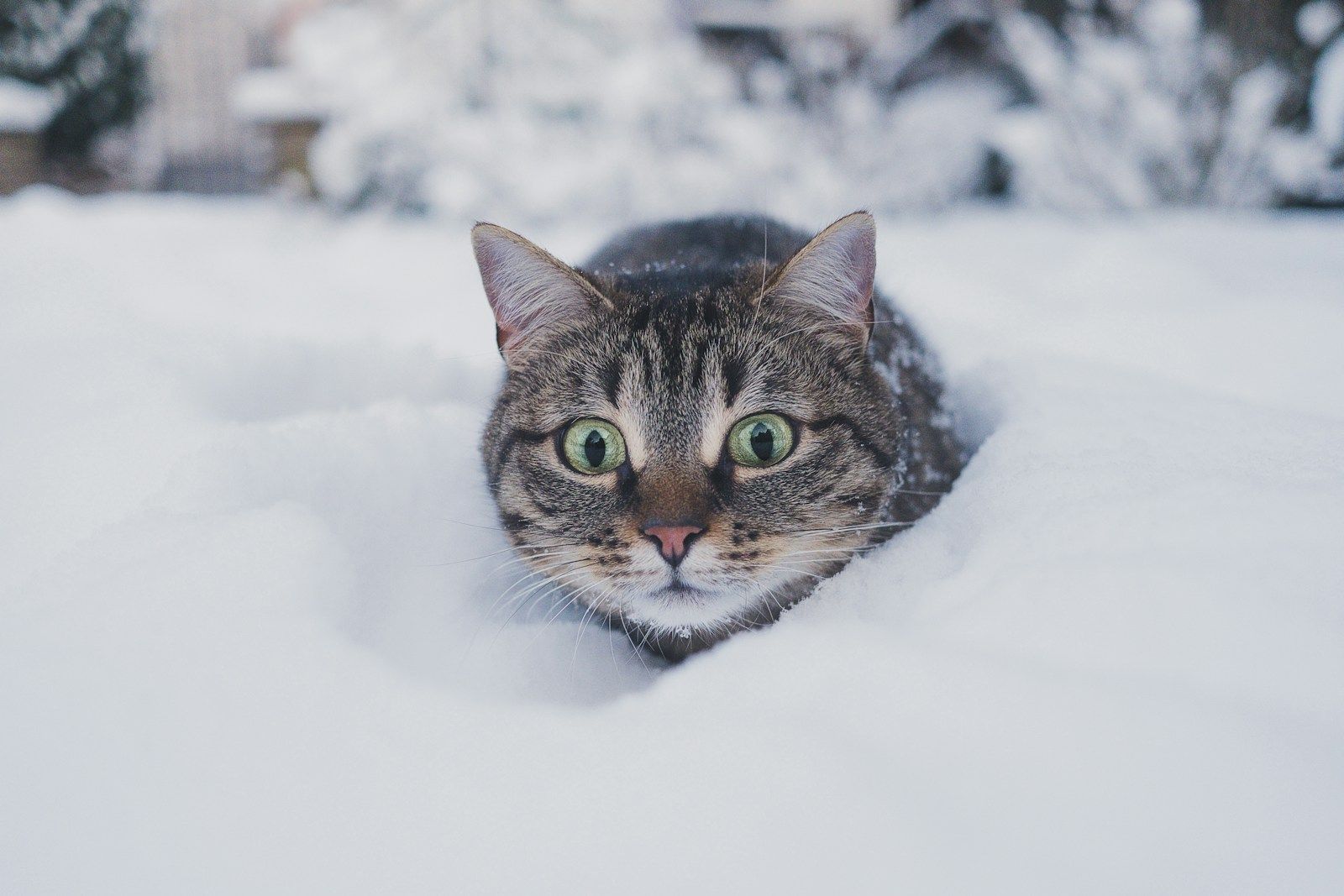
Can outdoor cats survive winter?
Community cats can get through a Western New York winter with a caretaker’s help. Alley Cat Allies says that unless a cat is sick or injured, letting it stay outdoors is the best way to protect it, and advises against taking community cats to a shelter. A thick coat is not enough on its own, though: they need a dry shelter out of the wind.
What they need from you: a dry shelter, water that does not freeze, more food, and a few safety habits around cars and chemicals.
How cold is too cold for outdoor cats?
None of the animal welfare groups we checked gives a single temperature. What matters more is whether the cat is dry and out of the wind. Below freezing (32°F), VCA notes, blood vessels in the skin narrow and frostbite becomes a risk, especially on ears, paws and tail, and especially on a wet cat.
The ASPCA’s rule of thumb works for cats outside too: if it is too cold for you, it is probably too cold for them. In a cold snap, check shelters, food and water more often, and watch for the signs of hypothermia and frostbite below.
Shelter: small, raised and full of straw
- Size: about 2 feet by 3 feet and at least 18 inches high. That holds three to five cats and their body heat; bigger is colder.
- Off the ground: set it on a wooden pallet.
- Doorway: only about 6–8 inches wide, facing away from the wind, or covered with a flap.
- Bedding: straw. Never hay, blankets or towels, which hold moisture and make the shelter wet and cold.
The Outdoor Cat Shelter Plans for Winter has three builds with cut lists and diagrams, plus a seasonal maintenance checklist and a shelter log.
Step-by-step builds with storage totes or a foam cooler: how to build an insulated winter shelter for outdoor cats.
Water that doesn’t freeze
- Put out fresh water once or twice a day instead of leaving it to freeze.
- Use bowls that are deep rather than wide, and avoid metal bowls: a tongue or nose can stick to frozen metal.
- Thick, dark plastic bowls in a sunny spot freeze more slowly.
- Serve water warm, or use a heated electric bowl made for pets, with a shielded cord. Solar-heated bowls need no power.
- Without power: set the bowl on a microwavable heat disc, or slip hand warmers between two nested bowls.
- If there is a spigot, letting it run slightly helps: moving water freezes more slowly than still water.
Feeding in the cold
- Increase portions. Staying warm burns energy, and extra food helps cats keep it up.
- Wet food takes the least energy to digest; warm it before serving. In deep cold, mainly dry food works too, because it will not freeze.
- A covered feeding station shields the food, the water and the cats from the weather.
- Before a forecast snowstorm, leave enough food and water to last more than a day.
- After a storm, clear snow from around shelters and feeding stations, and check that no doorway is snowed in.
Can’t build a shelter yourself? You can still help a colony: give toward a spay/neuter surgery. 90% pays for surgery and vet care; 10% covers humane traps, transport and running costs.
Check under the hood
Cats and kittens climb under cars and into engines to get warm. Before you drive in cold weather, give the hood a few firm taps, and check under the hood and between the tires and wheel wells.
De-icers, salt and antifreeze
- Do not use salt or chemical de-icers where cats walk. They can be harmful, even deadly, when licked off paws or fur. Use sand, gravel or a pet-safe ice melt instead.
- Clean up antifreeze spills and store containers where cats cannot reach them. Antifreeze made with propylene glycol is a safer choice than ethylene glycol.
- Watch for leaks under cars and for antifreeze used in RV and camper plumbing.
Antifreeze is an emergency. Ethylene glycol tastes sweet, and Pet Poison Helpline says as little as 2 teaspoons can kill a cat. The antidote works only if it is given within a few hours, so if you think a cat drank some, call a vet right away, or Pet Poison Helpline at (855) 764-7661 (24/7; a fee applies).
Hypothermia: the signs
A cat’s normal temperature is about 100–102.5°F. Signs that a cat is getting dangerously cold:
- Shivering
- Weakness, sluggishness or confusion
- Cold ear tips, paws and tail
- Stiff muscles
- Slow, shallow breathing
If you can safely handle the cat, move it somewhere warm and dry, wrap it in warm towels, and get it to a vet right away. Do not put it directly on a heating pad, which can burn, and give no medicine.
Frostbite and when to call a vet
Paws, ears and tail are where frostbite is most common, especially on a cat that is wet. The skin may look pale, gray or bluish, feel cold and hurt when touched, and signs can take several days to show.
- Get veterinary care right away if you suspect frostbite.
- If you can safely handle the cat, move it somewhere warm and dry. Do not rub the area, and do not use a heating pad or hair dryer on it.
- Never give human pain medicine; many are toxic to cats.
- Do not handle a feral cat with bare hands. If one needs care, call a vet, or call or text us for help trapping it.
- After hours: Veterinary Emergency Clinic, Cheektowaga, (716) 403-4370 (Open 24/7). Closer to home: Enchanted Mountains Urgent Veterinary Care, Olean, (716) 257-4830 (Fri–Mon 10am–8pm, text before arriving).
Trapping in winter
Alley Cat Allies’ rule of thumb: if it is too cold outside for you, it is too cold for a cat waiting in a trap, which can die of hypothermia. Trap in the warmest part of the day, never leave a trap unattended, and move a caught cat, covered, to a dry, temperature-controlled space right away. Ask the clinic to shave as little fur as possible.
Winter has one advantage: fewer cats are pregnant, so surgeries are simpler and fewer kittens are born in spring. Trap only if you can return the cats to a warm shelter. Plan the whole day with our caretaker starter kit and the TNR guide.
Quick answers
Should I bring a community cat inside for the winter?
Usually not. Alley Cat Allies advises leaving healthy community cats outdoors with shelter, food and water, and not taking them to a shelter because of the cold. A sick or injured cat needs a vet.
Do outdoor cats need a heated shelter?
No. A small shelter packed with straw holds the cats’ own body heat. If you do add heat, use only pads and bowls made for pets, with shielded cords.
Can I put blankets in a cat shelter?
No. Blankets, towels and newspaper soak up moisture and stay cold. Use straw, not hay.
Checklist
- Shelter raised, straw-filled, doorway away from the wind
- Deep, non-metal water bowls refreshed daily
- Extra food; feeding station covered
- Food and water for more than a day before a storm
- Tap the hood and check the wheel wells before driving
- No salt or chemical de-icer near the colony; antifreeze stored away
- Vet and poison-line numbers saved
Free, by email
Get the free winter readiness checklist, plus seasonal care notes
A one-page checklist to get shelters, food and water ready before the first hard freeze. Sent to your inbox. After that, a short email when the season changes: winter shelters, kitten season, trapping weather.
Check your inbox
We sent a confirmation link to . Click it and we’ll email you the checklist. Nothing there in a few minutes? Check your spam or promotions folder.
Sources
- Alley Cat Allies — Winter Weather Tips for Outdoor Catshttps://www.alleycat.org/resources/cold-weather-tips-for-cats/
- Alley Cat Allies — Top 8 Tips to Help Community Cats in an Arctic Blasthttps://www.alleycat.org/arctic-blast-forecast-alley-cat-allies-top-8-tips-to-help-community-cats/
- Alley Cat Allies — Providing Shelterhttps://www.alleycat.org/community-cat-care/providing-shelter/
- Alley Cat Allies — How to Catch a Feral or Stray Cat with a Traphttps://www.alleycat.org/community-cat-care/steps-for-a-successful-trapping-day/
- Best Friends Animal Society — How to Help Outdoor Cats in Winterhttps://bestfriends.org/pet-care-resources/how-help-outdoor-cats-winter
- Humane World for Animals — How to Care for Outdoor Cats in Winterhttps://www.humaneworld.org/en/resources/how-care-outdoor-cats-winter
- Neighborhood Cats — How to Stop Water From Freezinghttps://www.neighborhoodcats.org/how-to-tnr/colony-care/stop-freezing-water
- ASPCA — Cold Weather Safety Tipshttps://www.aspca.org/pet-care/general-pet-care/cold-weather-safety-tips
- Pet Poison Helpline — Antifreezehttps://www.petpoisonhelpline.com/poison/antifreeze/
- Pet Poison Helpline — Antifreeze poisoning and the vodka antidotehttps://www.petpoisonhelpline.com/blog/antifreeze-poisoning-vodka-antidote/
- VCA Animal Hospitals — Ethylene Glycol Poisoning in Catshttps://vcahospitals.com/know-your-pet/ethylene-glycol-poisoning-in-cats
- VCA Animal Hospitals — Frostbite in Catshttps://vcahospitals.com/know-your-pet/frostbite-in-cats
- Bond Vet — Can Cats Get Hypothermia?https://bondvet.com/b/can-cats-get-hypothermia-signs-symptoms-and-more
This guide is general information for caretakers, not veterinary advice. For a sick or injured cat, call your veterinarian or Veterinary Emergency Clinic, Cheektowaga at (716) 403-4370 (Open 24/7). Questions about our program: (716) 200-1283 · cattcountycatnippers.org